
ROAMETRY DESTINATION GUIDE
Scottish Highlands
Wild landscapes, winding roads, ancient history, and a slower rhythm built around the journey itself.
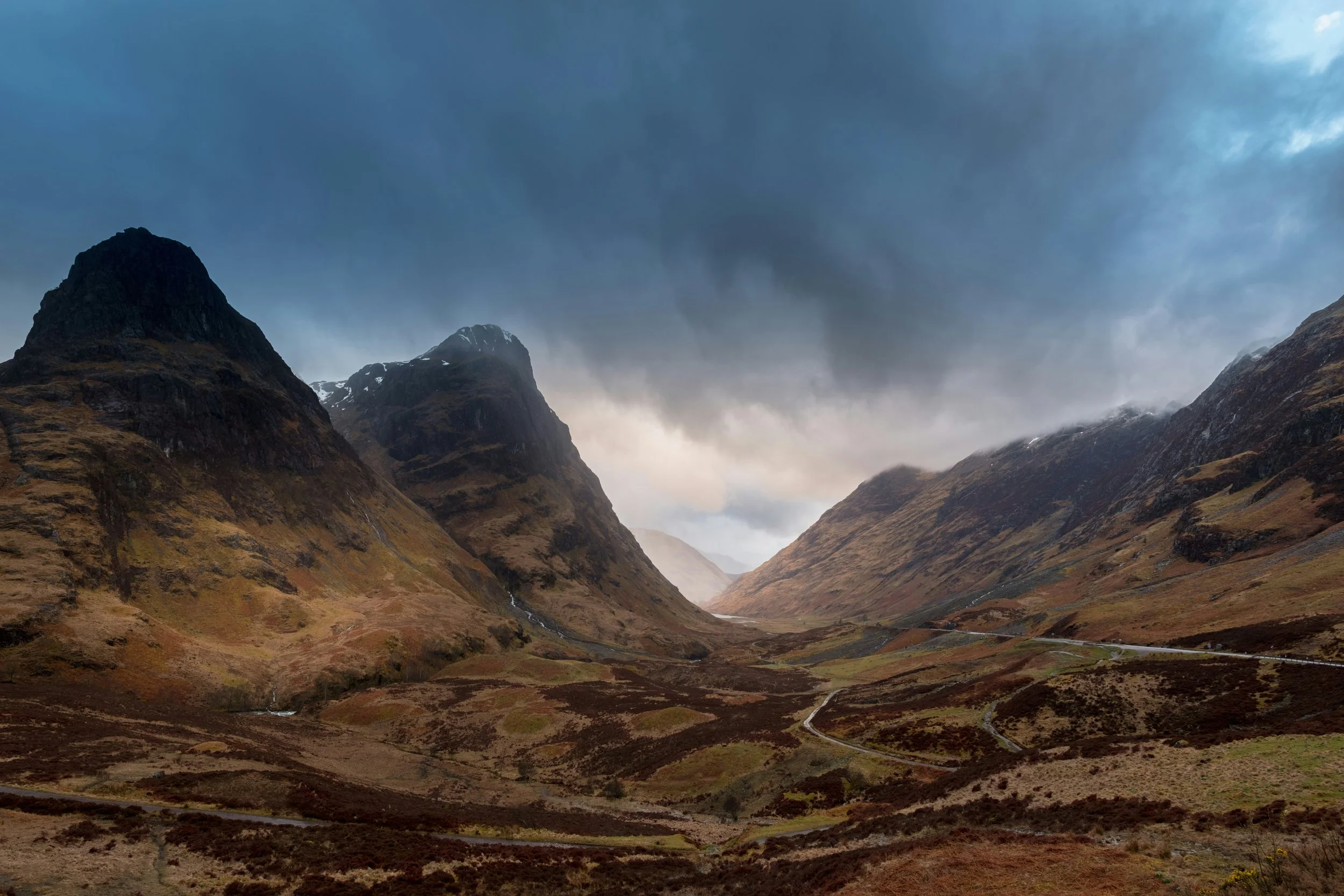
Photo: Glen Coe / Malcolm Lightbody / Unsplash
Affiliate DisclosureSome links in this guide are affiliate links. If you book or make a purchase through these links, Roametry may earn a commission at no additional cost to you. Our destination research and recommendations are developed independently, with traveler fit guiding our recommendations rather than affiliate partnerships.WHY THIS DESTINATION FITS
The Scottish Highlands and Isle of Skye are especially well suited to travelers who value dramatic scenery, history, scenic driving, hiking, and a slower trip built around the journey itself. The region rewards travelers who enjoy stopping often, following winding roads through glens and along lochs, exploring castles and historic sites, and letting weather and landscape shape the pace of the day.
Its strongest appeal comes from the combination of wild landscapes and deep cultural history. A single itinerary can include Glen Coe, Loch Ness, Eilean Donan Castle, Inverness, Culloden, the Cairngorms, and Skye’s Old Man of Storr, Quiraing, Cuillin mountains, and coastal scenery. VisitScotland regularly combines these places into self-drive and touring itineraries, which reflects how naturally the Highlands and Skye function as one travel experience.
The region also works especially well as part of a larger Scotland itinerary. Travelers can begin or end in Edinburgh or Glasgow and connect the Highlands with places such as Stirling, Loch Lomond, Oban, or other parts of the west coast without losing the sense of a cohesive road trip.
Travelers looking primarily for predictable weather, resort-style relaxation, nightlife, or a trip with minimal driving may find the Highlands a less natural fit. The experience is at its best when there is room for changing conditions, narrow roads, spontaneous stops, and days where the landscape matters as much as the attraction at the end of the route.
Roametry fit: Scenic road trips • Mountains & coast • History • Hiking • Castles • Whisky • Slow-to-balanced pace
AT A GLANCE
Best for — Scenic road trips • Hiking • History • Castles • Whisky • Dramatic landscapes
Ideal trip length — 7-10 days
That gives enough time to combine a few Highland bases with Skye without turning the trip into constant packing and driving. If you’re pairing the Highlands with Edinburgh or another part of Scotland, 10–14 days total works especially well.
Best seasons — May–June and September
Late spring and early autumn are especially appealing for longer daylight, outdoor activities, and generally lighter crowds than peak summer. Summer brings the longest days and widest range of visitor services, but July and August are also among the busiest months. VisitScotland highlights spring for longer days and outdoor travel, and summer for Highland road trips and extended daylight.
Travel pace — Slow to Balanced
The Highlands reward travelers who leave room for weather changes, scenic stops, hikes, and detours rather than trying to cover huge distances each day.
Budget feel — $$ / $$$$ — Moderate to Premium
Getting around — Rental car strongly recommended
Public transport can connect major towns and Skye, but a car gives much more flexibility for remote viewpoints, trailheads, castles, glens, and single-track roads. VisitScotland specifically notes that driving is the preferred option for many Skye visitors because it provides access to more remote areas.
Expect narrow and single-track roads in some areas; distances can take longer than they appear on a map.
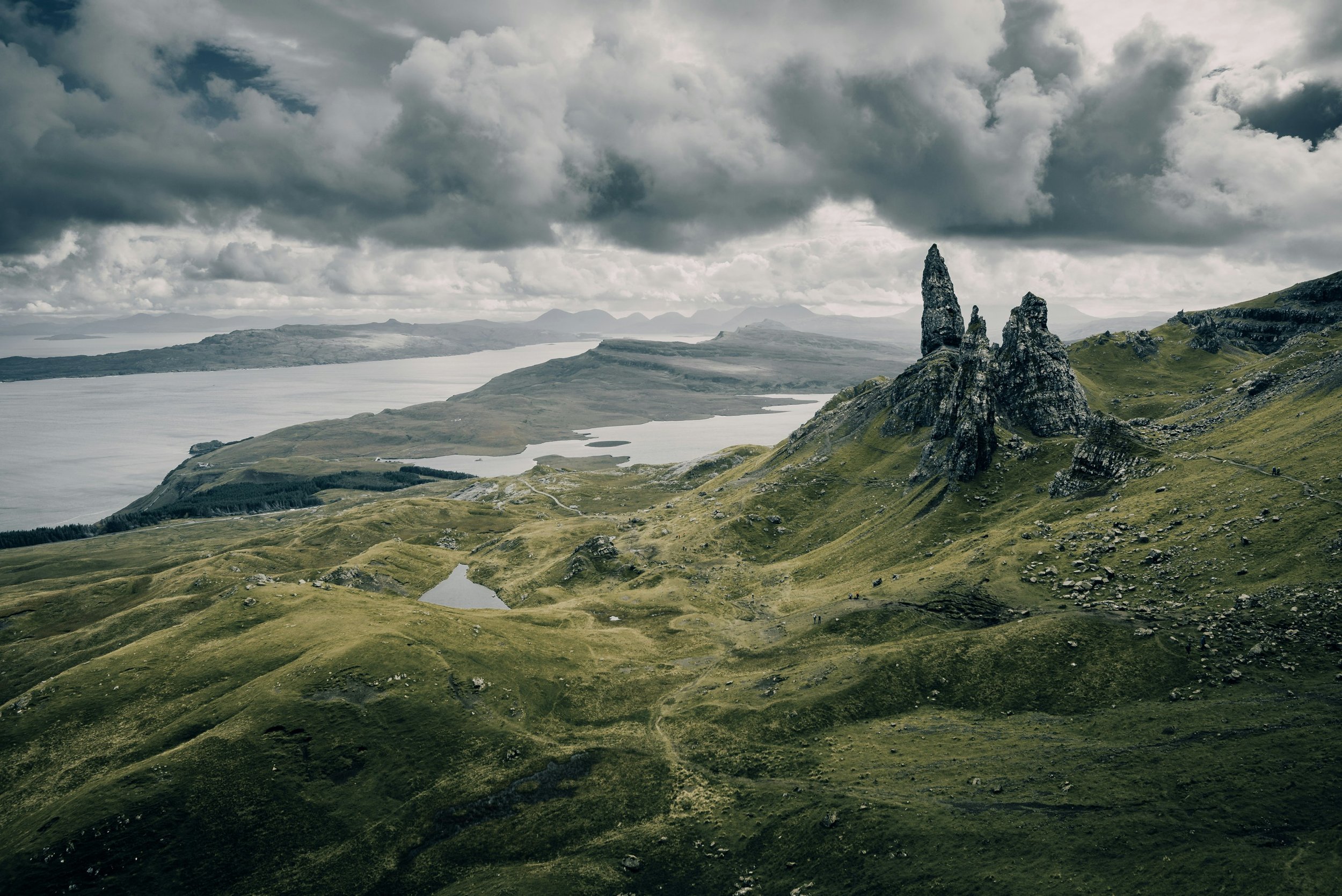
Photo: Old Man of Storr / Reuben Teo / Unsplash
WHAT DEFINES THIS DESTINATION
Photo: Polina Kuzovkoa / Unsplash
Landscape & Setting
The Scottish Highlands are defined by contrast: mountains, glens, lochs, moorland, rugged coastlines, forests, and long stretches of open country where the scenery often becomes the main event. Skye intensifies that experience with dramatic coastal cliffs, distinctive rock formations, and mountain landscapes that feel markedly different from Scotland’s cities and lowlands. VisitScotland describes both the Highlands and Skye as destinations built around wilderness, scenic routes, walking, and outdoor exploration.
Culture & Atmosphere
This is a region where history and local identity remain highly visible. Castles, battlefields, Gaelic language and music, Highland games, small communities, and long-standing traditions all shape the experience. On Skye especially, contemporary arts and community events still sit alongside strong Gaelic cultural influences.
Food & Local Life
Food here is closely tied to place. Seafood, local produce, traditional dishes, and whisky all play a major role, with distilleries and regional producers giving travelers a direct connection to the landscape. Skye in particular has developed a strong reputation for fresh seafood, local ingredients, and destination dining, while whisky remains one of Scotland’s most recognizable culinary traditions.
Adventure & Activities
The Highlands and Skye are best experienced actively. Hiking, scenic driving, cycling, wildlife watching, castle visits, distillery tours, photography, and coastal exploration all fit naturally into a trip here. The region works especially well for travelers who want their itinerary to move between outdoor activity, cultural stops, and scenic travel days rather than centering around one city or resort.
WHERE TO STAY
Inverness
Best for: first or last nights, Loch Ness, Culloden, restaurants, and easier transport connections.
Inverness works well as the practical gateway to the Highlands. It gives travelers city conveniences without losing access to nearby scenery, history, and road-trip routes, and it’s also the traditional starting point for the North Coast 500.
Fort William & Glen Coe
Best for: mountain scenery, hiking, Ben Nevis, Glenfinnan, and the western Highlands.
This area is a strong base for travelers who want dramatic mountain landscapes and active days. Fort William offers more services, while Glen Coe feels more atmospheric and landscape-focused; both fit naturally into a route toward Skye or the west coast.
Isle of Skye — Portree & Beyond
Best for: iconic scenery, photography, hiking, coastal drives, and a slower island stay.
Portree is the most convenient base for many first-time Skye visitors, but staying elsewhere on the island can create a quieter experience. Skye is popular enough that Roametry recommends booking accommodation well ahead during peak travel periods.
Cairngorms & Aviemore Area
Best for: hiking, wildlife, forests, outdoor recreation, and a more central Highland base.
The Cairngorms side of the Highlands offers a different landscape from the west coast and Skye, with mountains, lochs, woodland, and strong outdoor access. It works especially well for travelers who want several active days without changing hotels constantly.
Torridon, Applecross & the Northwest Highlands
Best for: remote scenery, single-track roads, hiking, photography, and travelers who want fewer crowds.
This is the choice for travelers who want the Highlands to feel genuinely remote. Torridon, Applecross, Assynt, and the northwest coast are some of the most dramatic parts of the region, but distances are slower and lodging is more limited—so advance planning matters. VisitScotland’s North Coast routes specifically connect Inverness, Applecross, Torridon, Assynt, and the northern Highlands as a scenic self-drive experience.
Recommended Stays
Curated Highland inns, hotels, castles, cottages and distinctive stays coming soon.
WHAT TO DO
Signature Experience - DRIVE THE HIGHLANDS & ISLE OF SKYE
A self-drive journey through the Highlands and Skye is less about reaching one attraction and more about the sequence of landscapes along the way: Glen Coe, Loch Ness, Eilean Donan Castle, mountain passes, coastal roads, and Skye’s Trotternish Peninsula all fit naturally into the same trip. VisitScotland itineraries commonly connect these places by road, reinforcing how central the journey itself is to the experience.
OUTDOORS & ADVENTURE
Hike the Old Man of Storr or explore the Quiraing on Skye
Walk beneath the mountains of Glen Coe
Explore the Cairngorms on foot
Visit the Fairy Pools or the Cuillin landscape
Seek out quieter viewpoints along the northwest coast
Skye’s best-known natural sights include the Old Man of Storr, Quiraing, Kilt Rock, Fairy Glen, Cuillin Hills, and Fairy Pools, while Glen Coe and the Cairngorms provide a very different mountain experience on the mainland.
CULTURE & LOCAL LIFE
Visit Culloden Battlefield and nearby Clava Cairns
Explore Eilean Donan, Urquhart, or Dunvegan Castle
Visit Glenfinnan and its historic monument
Spend time in Inverness or Portree
Look for opportunities to experience Gaelic music, storytelling, and local culture
The region layers centuries of history into the scenery, from prehistoric cairns and Jacobite sites to clan castles and historic communities. VisitScotland’s Highland itineraries regularly pair Culloden, Clava Cairns, Loch Ness, Eilean Donan, and Skye as part of the same cultural journey.
RELAXED & EASYGOING
Tour a Highland or Skye distillery
Sample whisky at Talisker on Skye
Take a Loch Ness cruise
Spend an afternoon in a small Highland village
Leave room for cafés, local shops, and unscheduled scenic stops
Whisky fits naturally into a Highland itinerary rather than needing to dominate it. Skye’s Talisker is an easy addition to an island day, while broader Scotland itineraries often combine distillery visits with castles, historic sites, and scenic driving.
Explore Scottish Highlands Experiences
From historic castles and Loch Ness cruises to guided journeys through dramatic glens and picturesque Highland villages, the Scottish Highlands offer countless opportunities to discover the region's landscapes, history, and traditions.
Explore available tours and activities to find experiences that complement your interests and travel style.
Affiliate disclosure: Roametry may earn a commission from qualifying bookings made through the link below, at no additional cost to you.
FOOD & DRINK
The Highlands and Skye are especially rewarding for travelers who like food that feels connected to place. Fresh seafood, local meat and game, seasonal produce, traditional Scottish dishes, and whisky all play a major role, while smaller towns and islands add cafés, bakeries, pubs, farm shops, and destination restaurants to the mix. VisitScotland highlights seafood, meats, soft fruits, whisky, gin, and seasonal produce as key parts of Scotland’s food culture.
ROAMETY FAMILY FAVORITES
When our family has personally visited a destination, this is where we share the places and experiences we genuinely loved.
Don’t Miss
Fresh seafood, especially oysters, mussels, scallops, salmon, and other locally landed fish
Haggis, whether traditional or used in a more modern preparation
Venison and other game, particularly in Highland areas
Scottish cheeses, oatcakes, and locally baked goods
Cranachan and other traditional desserts
Scotch whisky, including Highland and island styles
Local gin and craft beer, which are increasingly common throughout the region
On Skye, seafood and whisky are especially prominent; VisitScotland specifically highlights fresh local produce, seafood-focused dining, and distilleries such as Talisker and Torabhaig.
Where to Focus
Skye is one of the strongest food stops in the region, particularly for seafood, local produce, and whisky. Carbost is especially convenient for pairing food with a Talisker visit, while Portree and other parts of the island offer everything from casual cafés to destination dining.
Inverness and the central Highlands provide the widest concentration of restaurants, pubs, and contemporary Scottish cooking, while smaller Highland communities reward travelers who seek out local bakeries, seafood stops, farm shops, and pubs rather than relying only on larger towns.
Whisky country deserves some deliberate attention even for travelers who are not serious whisky enthusiasts. The Highland whisky region is geographically broad and produces an unusually wide range of styles, from lighter expressions to coastal malts.
Good to Know
Dining options become more limited in remote areas, and popular restaurants on Skye and in smaller Highland communities can book out well ahead during busy travel periods. Roametry recommends reserving any meal that matters to you, while still leaving space for spontaneous stops at cafés, pubs, farm shops, seafood shacks, and local producers.
Seasonality matters here as well. Fresh seafood, berries, game, and other ingredients change throughout the year, so menus often reflect what is available rather than remaining identical season to season.
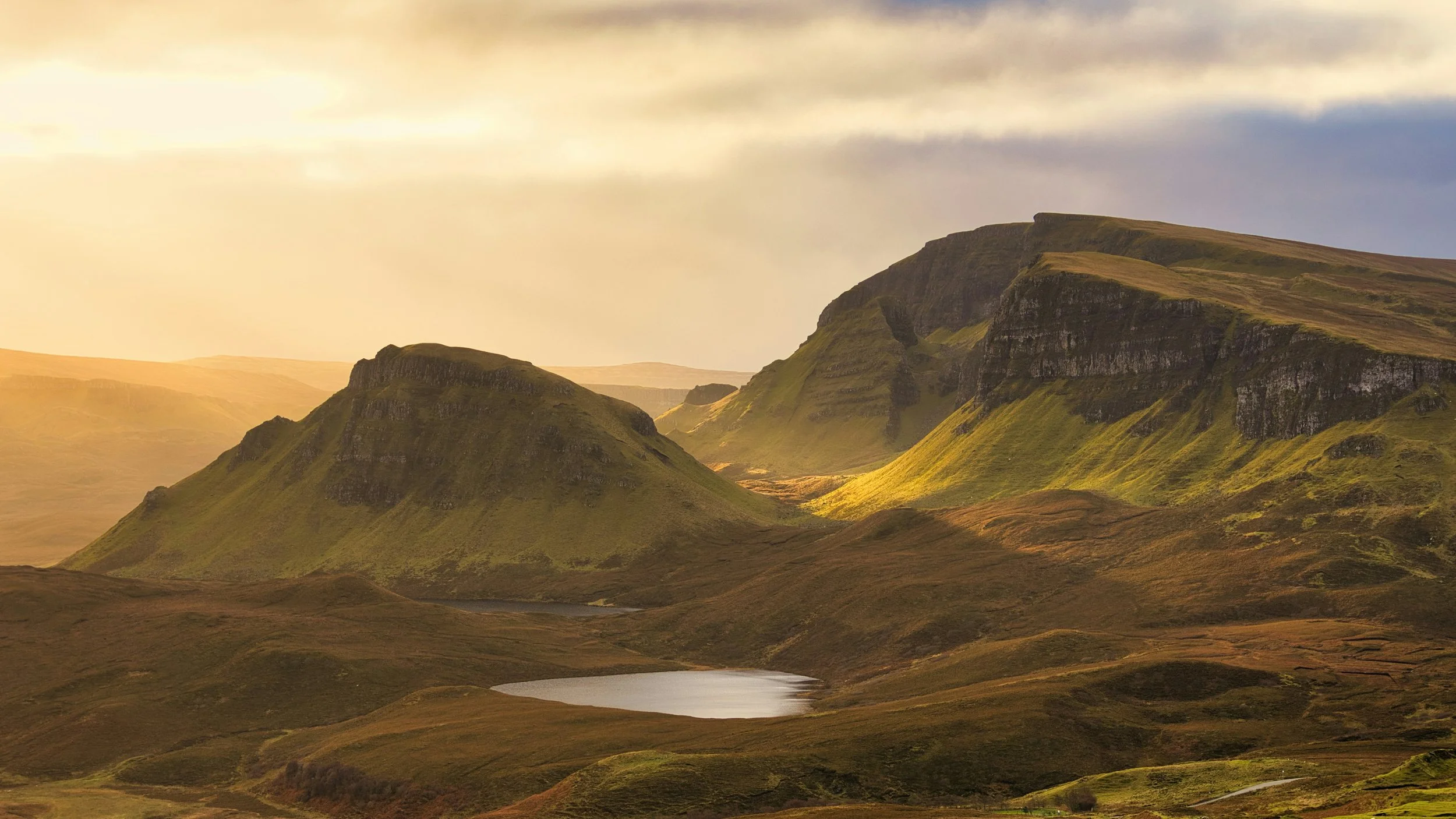
Photo: Sunset over the mountains of Skye / v2osk / Unsplash
Planning Notes
Best Time To Go
For most travelers, May–June and September offer an especially good balance of longer days, outdoor access, and fewer peak-summer crowds. July and August bring the longest daylight and the fullest visitor season, but they are also busier. Scotland’s weather can change quickly—especially in Highland, coastal, and hill areas—so waterproof layers and flexible plans matter in every season.
How Long To Stay
Roametry recommends 7–10 days for the Highlands and Skye themselves, or 10–14 days if you also want meaningful time in Edinburgh, Glasgow, Stirling, Loch Lomond, or another part of Scotland. Skye alone rewards at least a few days; VisitScotland notes that its roads, weather, walking opportunities, and scenery often make slower travel more satisfying than trying to cover the island quickly.
Getting There
Inverness is the most direct gateway into the Highlands, with air, rail, coach, and road connections. Travelers can also fly into Edinburgh or Glasgow and make the journey north part of the trip, which works especially well if the itinerary includes other regions of Scotland before or after the Highlands.
Pairing the Highlands with the rest of Scotland
For many first-time visitors, the Highlands work best as one major chapter of a larger Scotland trip. Edinburgh adds history and urban culture; Stirling provides another strong historic stop; Loch Lomond creates a natural transition between the Central Belt and western Highlands; and Glasgow can work well as an arrival or departure point. You don’t need to force all of Scotland into one trip, but pairing the Highlands with one or two contrasting regions usually creates a more complete first experience.
Roametry Planning Tip
Plan fewer miles and more time than the map suggests. A Highland road trip is at its best when there is room for weather changes, single-track roads, viewpoints, short walks, ferries, and places you did not originally intend to stop. Roametry recommends treating the journey between bases as part of the itinerary rather than dead travel time.
Getting Around
A rental car gives the greatest flexibility for this destination. Drive on the left, expect winding roads and occasional single-track sections, and use passing places correctly rather than treating posted mileage as a reliable estimate of travel time. Skye in particular is easiest to explore by car because many of its most memorable places are away from the main public-transport routes.
Book Ahead
Roametry recommends reserving Skye accommodations, distinctive Highland stays, priority restaurants, rental cars, and ferries well ahead during popular travel periods. If your route uses the Mallaig–Armadale ferry, CalMac recommends booking in advance and checking the service status before travel; schedules can also be affected by tides, maintenance, and weather.
Know Before You Go
Midges are part of summer travel in Scotland, particularly in wetter, sheltered areas, while ticks can be encountered in grassy or wooded environments. Basic preparation makes both manageable. Road conditions can also change because of weather, accidents, or maintenance, so check Traffic Scotland before longer driving days.
Find Your Stay
Where you stay can shape your travel experience. Whether you prefer the convenience of a hotel or resort or the flexibility of a private vacation rental, explore accommodations that suit your travel style, priorities, and budget.
Affiliate disclosure: Roametry may earn a commission from qualifying bookings made through these links, at no additional cost to you.THE ROAMETRY TAKEAWAY
The Scottish Highlands and Isle of Skye are a strong fit for travelers who want the journey to matter as much as the destination. This is a place for scenic roads, dramatic landscapes, castles, hiking, whisky, small communities, and days that unfold more slowly than they might on a tightly scheduled city trip.
Travelers who enjoy road trips, outdoor scenery, history, photography, local food and drink, and flexible pacing are likely to get the most from the region. VisitScotland’s own itineraries consistently connect places such as Glen Coe, Loch Ness, Eilean Donan, Skye, Inverness, and the west coast as part of one broader touring experience.
Those prioritizing predictable weather, nightlife, resort-style relaxation, or minimal driving may find another destination a more natural match. The Highlands reward patience, flexibility, and a willingness to let weather, road conditions, and an unexpected stop reshape the day.
BEST MATCH FOR
Scenic road trips • Mountains & coast • History • Hiking • Castles • Whisky • Slow-to-balanced travel
SOURCES & FURTHER READING
Roametry destination guides are independently written using research from official tourism, government, park, cultural, transportation, and destination resources. Conditions, schedules, access, and regulations can change; travelers should verify current information directly with the appropriate source before departure.
VisitScotland — The Scottish Highlands
Official destination guidance covering Highland regions, scenery, activities, accommodations, transportation, road-trip ideas, and travel planning.
Visit the Scottish Highlands guide
VisitScotland — Isle of Skye
Official information on Skye’s landscapes, attractions, activities, accommodations, events, and travel planning.
Explore the Isle of Skye
VisitScotland — Driving in Scotland
Practical guidance on left-side driving, single-track roads and passing places, parking, road rules, and self-drive travel.
View driving guidance
VisitScotland — Weather in Scotland
Seasonal and regional weather guidance, including changing conditions across coastal, island, mountain, and Highland areas.
View Scotland weather guidance
VisitScotland — Midges & Ticks in Scotland
Practical information on midge season, tick awareness, prevention, and outdoor preparation.
Read the midges and ticks guide
VisitScotland — Scenic Driving Routes & Road Trips
Official road-trip inspiration and scenic-route guidance for self-drive travel around Scotland.
Explore Scotland road trips
Traffic Scotland
Official trunk-road information including live incidents, roadworks, weather warnings, traffic cameras, and route planning.
Check Traffic Scotland
CalMac — Mallaig to Armadale Ferry
Official timetable, fare, booking, and service-status information for the ferry connecting Mallaig with Skye.
View Mallaig–Armadale ferry information
Scotch Whisky Association — Scotch Whisky Regions
Official background on Scotland’s five whisky regions and the range of styles associated with the Highlands and islands.
Explore Scotch whisky regions
Last researched and reviewed: October 2026
Our Research Approach
At Roametry, we believe the best destinations aren't necessarily the most popular—they're the ones that fit the traveler.
Our destination guides are informed by a growing research catalog that examines travel experiences, cultural characteristics, seasonal considerations, accessibility, and practical travel factors. We draw on reputable published sources and destination-specific research to create thoughtful, informative guides that help travelers explore places with greater confidence.
Each guide is reviewed for accuracy and relevance before publication. Because travel conditions, availability, and local information can change, we encourage travelers to verify important details before making arrangements.